Roof Systems Protected From Water and UV Damage
Roof Coatings in Erath for commercial, industrial, and metal roofing systems requiring waterproofing and extended service life
Roof coatings create a protective membrane that addresses the two primary causes of commercial roof failure: water infiltration and ultraviolet degradation. Property owners notice aging roof surfaces show visible wear through chalking, cracking, or areas where water pools after rain, conditions that lead to leaks and accelerated deterioration if left unaddressed. Acadiana Custom Coatings LLC applies roof coating systems to commercial, industrial, and metal roofing in Erath where restoration provides a cost-effective alternative to complete roof replacement while extending the functional lifespan of the existing roof structure.
The coating process begins with roof evaluation to identify areas requiring repair, followed by surface preparation to remove debris, dirt, and loose material that would prevent proper adhesion. Coatings bond directly to cleaned roof surfaces, creating a continuous waterproof layer that seals seams, fasteners, and penetrations where leaks typically develop. The reflective properties of modern roof coatings reduce surface temperatures by reflecting solar radiation rather than absorbing it, which decreases cooling loads and slows the thermal cycling that causes roofing materials to expand and contract until they crack.
Request a roof evaluation to determine whether coating application addresses your current roof condition.
How Roof Coatings Address Ongoing Deterioration
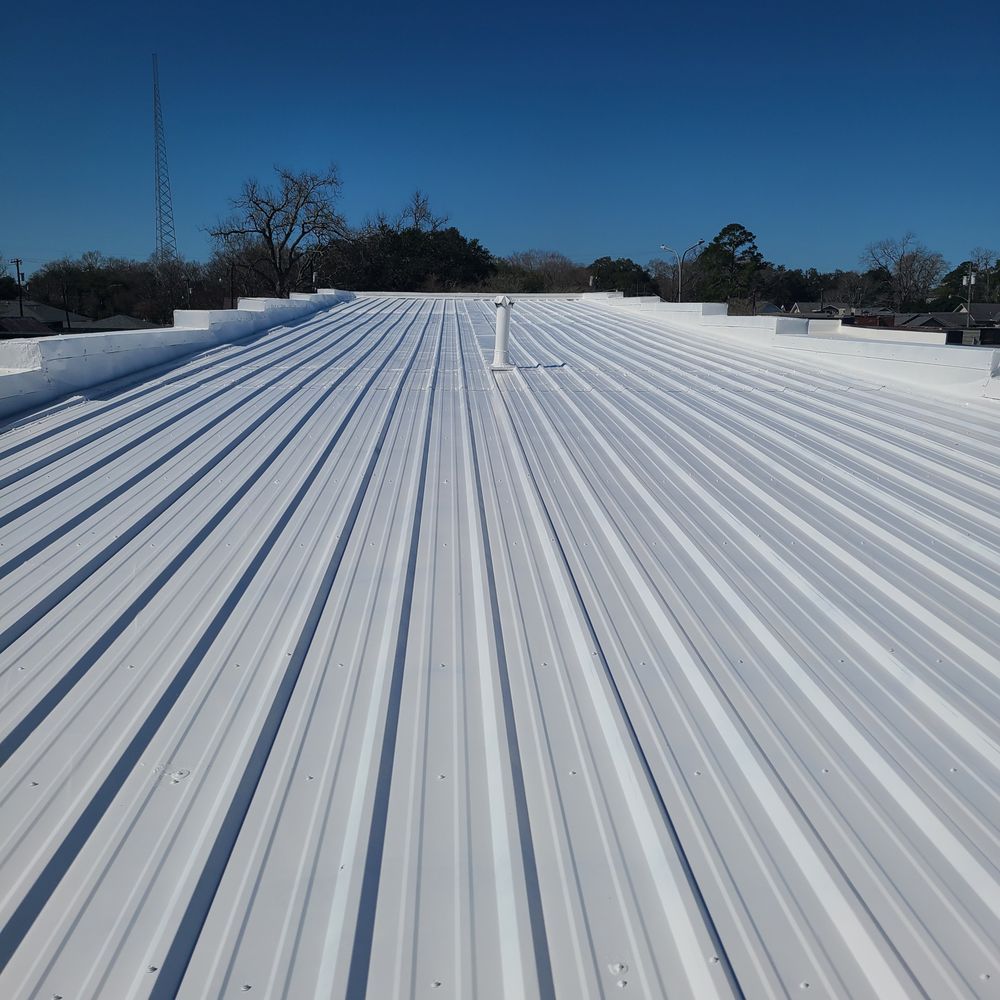
Coating application transforms an aging roof into a protected system by creating a barrier against the environmental factors that cause progressive damage. The material fills minor surface cracks and bridges seams where separate roof sections meet, eliminating the pathways water follows to reach the substrate. On metal roofs, coatings prevent rust by sealing exposed fasteners and panel overlaps where moisture accumulates, while on single-ply membranes, they reinforce areas where the original material has become brittle from UV exposure.
After coating application, property owners see a roof surface that no longer shows signs of weather damage, with a uniform appearance and restored waterproofing integrity. Leaks that developed in vulnerable areas stop occurring because the coating has sealed the entry points. The building's interior temperature becomes easier to control as the reflective roof surface reduces heat gain through the roof deck, particularly noticeable in facilities with limited insulation or large roof areas relative to building volume. Energy costs associated with cooling decrease measurably during summer months.
Roof restoration through coating application costs significantly less than tear-off and replacement while adding ten to fifteen years of service life to the existing roof system. The process avoids the disposal costs and business disruption associated with complete roof replacement, making it practical for building owners who need extended roof performance without major capital expenditure.
Common Roof Coating Questions
Understanding what roof coatings accomplish and how they differ from roof replacement helps you make informed decisions about maintaining your commercial property.
What roof types can be coated?
Coatings adhere to metal panel roofs, single-ply membranes like TPO and EPDM, modified bitumen systems, and built-up roofing. The roof must have adequate structural integrity and drainage, but surface wear and minor damage do not disqualify it from coating as long as the underlying deck remains sound.
How long does a roof coating last?
Properly applied coatings provide ten to fifteen years of additional roof life, depending on the coating type, roof slope, and maintenance. The coating itself weathers gradually but maintains waterproofing integrity throughout its service life, and can be recoated when performance begins to decline.
What happens during the coating process?
The work involves cleaning the roof surface, repairing damaged areas, priming if required by the coating system, and applying the coating in multiple passes to achieve the specified thickness. The material cures through solvent evaporation or chemical reaction, depending on the product, and becomes fully waterproof within hours to days after application.
How do coatings improve energy efficiency?
Reflective coatings reduce roof surface temperatures by twenty to fifty degrees compared to uncoated dark roofs, which decreases the amount of heat conducted into the building. In Louisiana's climate, where cooling represents the majority of HVAC energy use, this heat reduction translates directly to lower electricity consumption during the extended cooling season.
When should I coat a roof instead of replacing it?
Coating makes sense when the roof structure remains sound but the surface shows aging, when leaks occur at seams or penetrations rather than widespread membrane failure, or when you need to extend roof life for a specific period before planned replacement. A professional evaluation determines whether your roof condition suits coating or requires more extensive repair.
Acadiana Custom Coatings LLC evaluates commercial and industrial roofs to determine whether coating application provides the protection and extended service life your property requires. Schedule a roof inspection to receive recommendations based on your roof's current condition and performance needs.