
Structural Insulation That Adds Building Strength
Closed-Cell Spray Foam Insulation in Erath for metal buildings, crawl spaces, and commercial facilities where moisture control and structural reinforcement matter
Closed-cell spray foam cures into a rigid material that adds measurable racking strength to wall and roof assemblies while creating a vapor barrier that prevents moisture transmission through the building envelope. Acadiana Custom Coatings LLC installs closed-cell insulation in Erath for structures where humidity infiltration causes condensation problems, where building codes require vapor retarders, or where adding rigidity to metal panels and framing improves structural performance. The foam's density reaches 2 pounds per cubic foot compared to open-cell's 0.5 pounds, which means each inch provides higher R-value and the cured material resists water absorption even during direct contact with moisture.
Application targets exterior walls, crawl space ceilings, metal building interiors, and commercial spaces where controlling moisture migration through the envelope prevents long-term building damage. Louisiana's climate produces sustained high humidity that drives moisture into any unsealed building assembly, and closed-cell foam's vapor-impermeable characteristics stop this moisture movement while simultaneously insulating against heat transfer.
Request a customized insulation quote based on your building's specific moisture control and structural requirements.
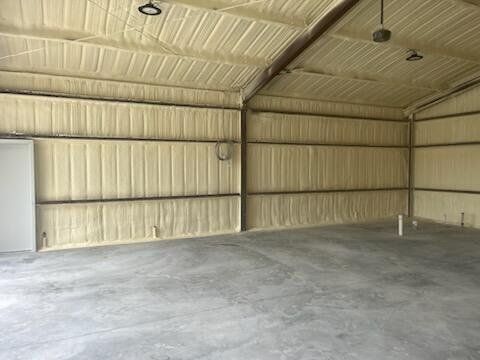
What Closed-Cell Foam Accomplishes
The installation process applies foam at higher pressure than open-cell formulations, producing a dense material that expands approximately 30 times rather than 100 times, which allows precise thickness control in wall cavities and creates a rigid layer bonded directly to substrates. Metal buildings gain both thermal resistance and panel stiffness, while crawl spaces get a moisture barrier that prevents ground humidity from entering the building envelope and causing mold growth on floor joists.
After installation, metal building interiors no longer develop condensation dripping from roof panels during temperature swings, crawl spaces remain dry without musty odors migrating into living spaces, and exterior walls resist moisture intrusion that would degrade insulation performance and promote rot in wood framing. The foam's rigidity means it maintains full thickness and thermal performance without compression or sagging that occurs with fibrous materials over time.
Closed-cell foam costs more per board foot than open-cell formulations, but the applications that require its specific properties—vapor control, structural enhancement, and maximum R-value per inch—justify the investment where those performance characteristics prevent building damage or meet code requirements. Commercial facilities, warehouses, and metal agricultural buildings benefit from the added panel rigidity and condensation control, while residential crawl spaces and exterior wall cavities gain moisture resistance that protects structural components from Louisiana's humid conditions.
Common Questions About Dense Foam Insulation
Building owners evaluating insulation options often need to understand what closed-cell foam provides beyond standard thermal resistance.
What makes closed-cell foam necessary for metal buildings specifically?
Metal panels conduct temperature directly, creating interior surfaces that drop below dew point during cooling cycles, which causes condensation that drips onto contents and corrodes structural components—closed-cell foam applied to the interior panel surface prevents this condensation by keeping the metal above dew point temperature.
How does closed-cell foam create structural reinforcement?
The rigid foam bonds to framing members and sheathing, creating a composite assembly that resists racking forces more effectively than the individual components alone, which is why building codes in high-wind areas sometimes credit properly installed closed-cell foam toward structural requirements.
Why does Louisiana's climate make moisture resistance particularly important?
Erath's sustained high outdoor humidity combined with air-conditioned interior spaces creates continuous vapor drive toward cooler interior surfaces, and any air leakage path or vapor-permeable insulation allows moisture to accumulate in wall and ceiling cavities where it supports mold growth and wood decay.
What applications require closed-cell foam instead of open-cell formulations?
Crawl spaces need vapor barriers to prevent ground moisture migration, exterior walls benefit from moisture resistance that protects sheathing and framing, and any application where maximizing R-value in limited cavity depth matters—like insulating between metal building purlins—requires closed-cell's higher density.
How long does closed-cell foam's moisture resistance last?
The cured foam remains impermeable to water vapor and resistant to water absorption throughout its service life, which means the moisture control you achieve at installation continues protecting the building envelope indefinitely without degradation or maintenance requirements.
Acadiana Custom Coatings LLC assesses your building's construction type, moisture exposure, and performance requirements to specify whether closed-cell foam will address your insulation and envelope needs. Schedule an evaluation to review how this insulation type suits your commercial or residential project.