
Attic Insulation That Seals While It Insulates
Open-Cell Spray Foam Insulation in Erath for residential structures where air leakage through framing and roof penetrations drives up cooling costs
Air travels through gaps around recessed lights, plumbing vents, electrical boxes, and framing joints in attics and walls, carrying heat and humidity that undermine insulation performance. Acadiana Custom Coatings LLC applies open-cell spray foam insulation in Erath for homes where traditional insulation leaves these pathways open and allows conditioned air to escape into unconditioned spaces. The foam expands up to 100 times its liquid volume during application, which means it fills irregular cavities, wraps around obstructions, and creates a continuous barrier that stops air movement through the building envelope.
Installation involves spraying liquid foam into attic rafter bays, wall cavities, or other residential spaces where it expands to contact all surfaces and cure into a spongy, semi-rigid material. The open-cell structure traps air in tiny bubbles that slow heat transfer while the seamless coverage eliminates the air leakage that accounts for 25 to 40 percent of heating and cooling loss in homes with fibrous insulation.
Arrange a project consultation to evaluate whether open-cell foam suits your home's insulation needs.
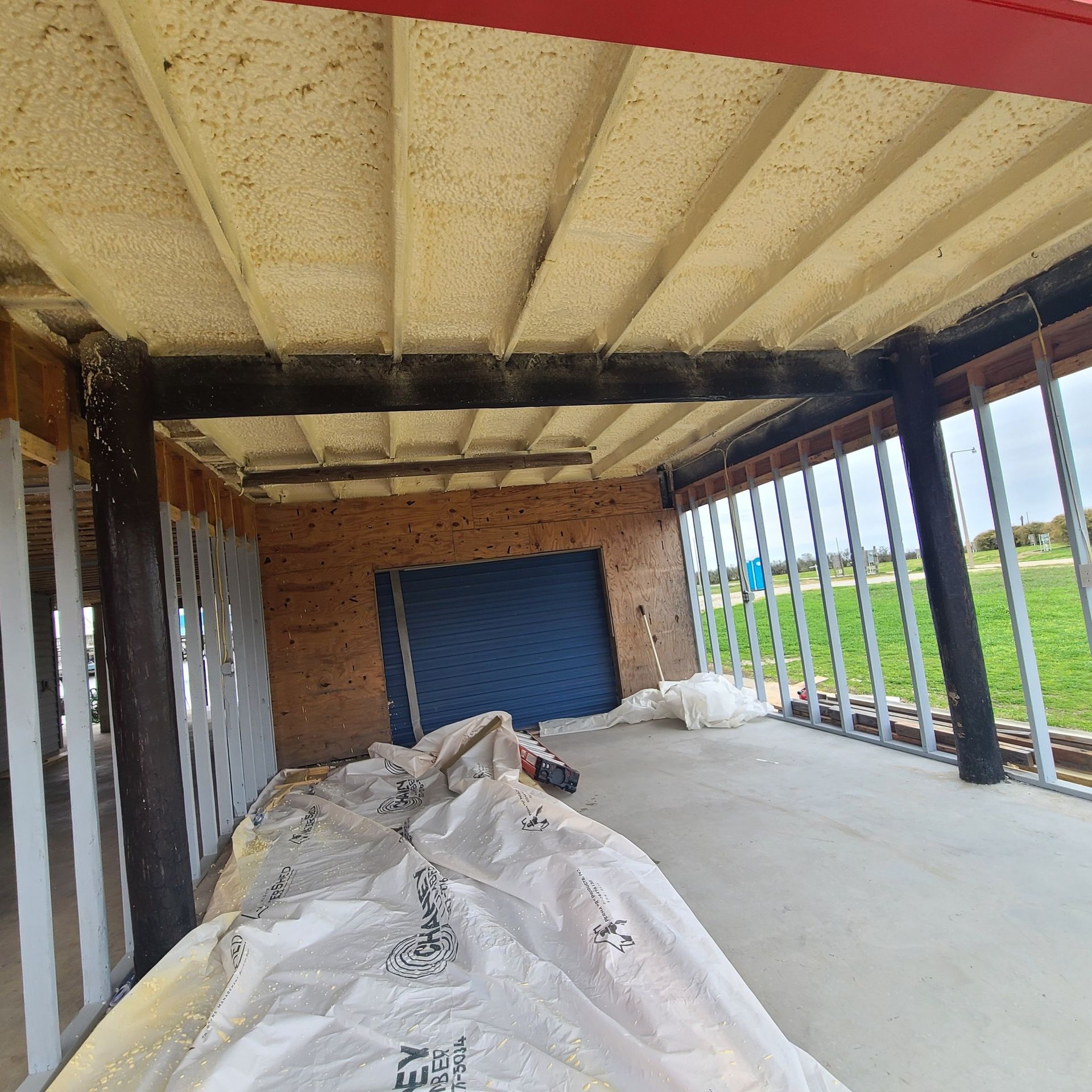
Why Open-Cell Foam Works for Residential Applications
Open-cell foam offers lower density than closed-cell formulations, which allows it to expand further and cover more area per pound of material applied. This expansion characteristic makes it particularly effective in attics where covering large rafter bay areas matters more than achieving maximum R-value per inch, and in walls where the foam needs to flow around wiring and plumbing before expanding to fill the cavity completely.
Once cured, you notice that rooms maintain consistent temperatures without hot or cold spots, outdoor noise from traffic or weather becomes noticeably quieter, and dust infiltration decreases because air is no longer pulling through wall and ceiling penetrations. The sound-dampening effect occurs because the foam's cellular structure absorbs acoustic energy that would otherwise transmit through wall and floor assemblies.
Open-cell foam works best in climate-controlled spaces where vapor drive is managed by other building envelope components, which makes it suitable for attics with proper ventilation design and interior walls where moisture accumulation is not a concern. Builders often specify open-cell foam for new residential construction where coverage area and air sealing take priority over the structural reinforcement and moisture resistance that closed-cell foam provides in more demanding applications.
Questions Homeowners Have About Open-Cell Foam
Residential property owners often want clarity on how open-cell foam compares to other insulation options and what performance changes to expect.
What situations make open-cell foam the preferred insulation choice?
Open-cell foam suits residential attics, interior walls, and other spaces where achieving complete air sealing and sound reduction matters more than maximizing R-value in limited cavity depth, particularly when covering large areas where material cost affects project feasibility.
How does the expansion process ensure complete coverage?
The foam expands to 100 times its applied volume within seconds of spraying, which forces the material into every crack, corner, and irregular space before it begins curing, ensuring that gaps around obstructions and framing irregularities get filled rather than bridged over like batt insulation would do.
What sound reduction benefits does open-cell foam provide compared to fiberglass?
Open-cell foam's semi-rigid structure absorbs sound waves traveling through wall and floor assemblies, reducing noise transmission between rooms and from outside sources more effectively than fibrous insulation that only slows sound rather than dampening it.
How long does open-cell foam maintain its insulating performance?
The cured foam remains stable indefinitely without settling, compressing, or developing gaps that reduce thermal performance, which means the air sealing and insulation value you measure immediately after installation will still be present decades later without requiring replacement or enhancement.
What energy savings improvements do Erath homeowners typically see after installation?
Homes with significant air leakage before foam application usually experience 25 to 40 percent reductions in cooling costs because the sealed envelope prevents conditioned air loss and reduces the cooling load that HVAC equipment must handle during Louisiana's hot, humid months.
Acadiana Custom Coatings LLC evaluates your home's construction and insulation needs to determine whether open-cell foam will deliver the performance improvements you need. Contact our team directly at (337) 224-9982 to discuss your residential insulation project.